


Overview
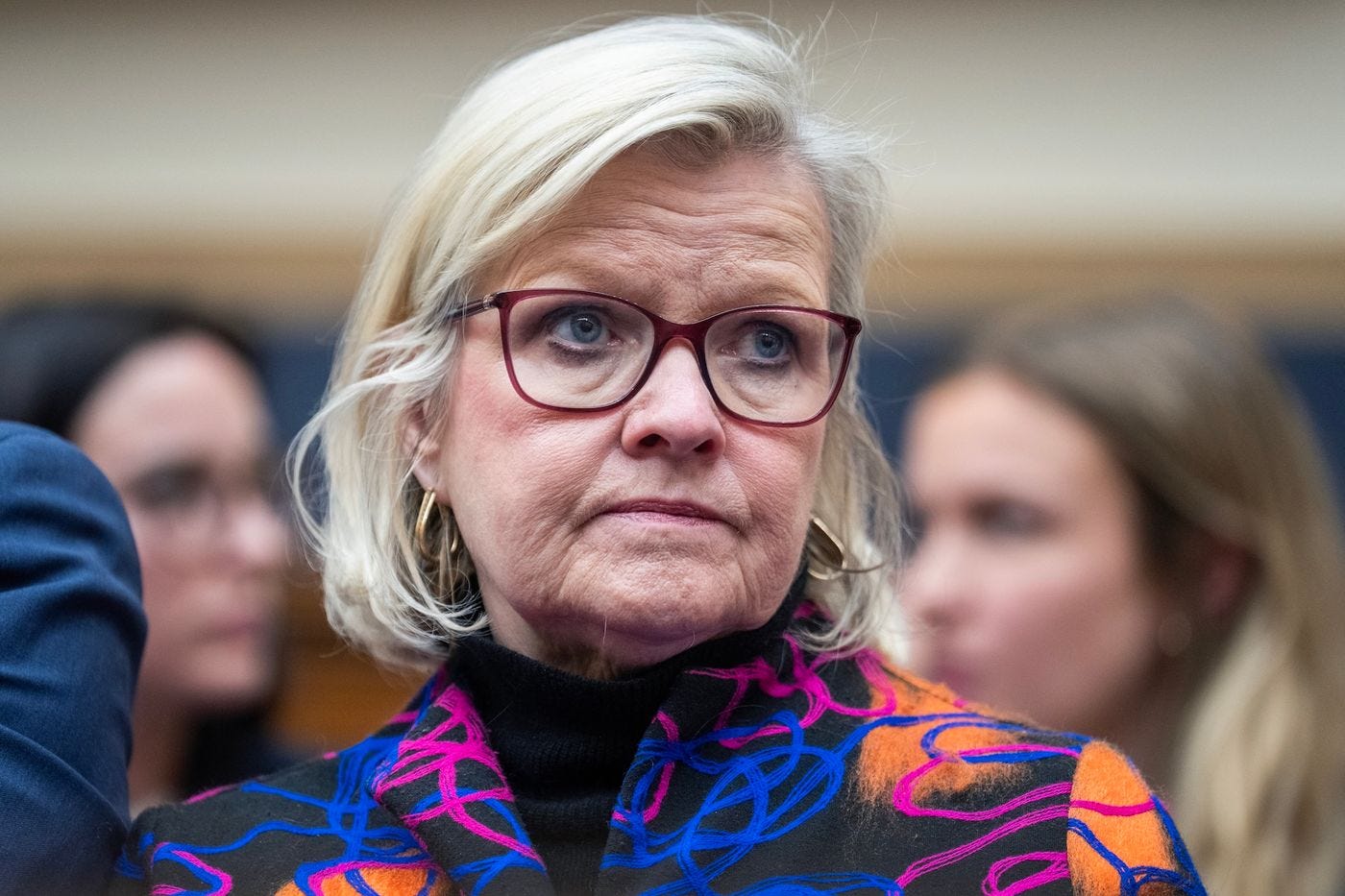
Former Trump lawyer Cleta Mitchell claimed voter fraud took place in nursing homes in the 2020 election.
The Centers for Medicare and Medicaid Services changed their guidelines for facilitating elections in nursing homes, citing two cases of alleged voter fraud from 2020.
The cases cited in the guidelines had no material impact on the 2020 election results.
In an appearance on Steve Bannon’s War Room podcast on September 3, Election Integrity Network (EIN) founder and chairwoman Cleta Mitchell claimed that “left-wing groups” infiltrate nursing homes to steal the votes of elderly residents. Mitchell, who served as one of President Donald Trump’s attorneys in the unsuccessful attempt to contest the results of the 2020 election, alleged that this nursing home fraud was responsible for President Trump’s defeat in Wisconsin in 2020, which he lost to President Joe Biden by a little more than 20,000 votes.
“A few hundred votes…and they go get them in these nursing homes,” she said. “...They steal the votes of these vulnerable, elderly people and we have to not let them do that.”
Mitchell was repeating a debunked conspiracy theory from the 2020 presidential election, when police officers in Wisconsin alleged that nursing homes in Wisconsin were hotbeds of voter fraud. One allegation centered on nursing homes in Milwaukee County, with conspiracy theorists alleging that some nursing homes had 100 percent turnout for the election. However, a report in the Milwaukee Journal Sentinel revealed that only one nursing facility in Milwaukee County saw that level of turnout, with nursing homes overall reaching 76 percent turnout. The Wisconsin State Journal found that only one nursing home in Dane County reported 100 percent turnout, and that nursing home had just 12 registered voters.
Mitchell returned to the podcast on September 15, 2026, reiterating her previous statements. “You may say ‘well, what good does that do?’” she said. “Well, let me tell you something: it’s hundreds of votes. It can be hundreds of votes, maybe thousands of votes in a given congressional district. So you want to make sure the wrong people don’t get elected? Go protect those people in the nursing homes. We’ve got the tools to tell you how to do it.”
Mitchell redirected listeners to download EIN’s “Protecting Vulnerable Voters” toolkit from its website.
How New Federal Guidelines Could Make It Harder for Nursing Home Residents to Vote
The EIN Toolkit, which is meant to train volunteers to monitor how nursing homes handle resident voting, is based on a memo issued in July 2026 by the Centers for Medicare & Medicaid Services (CMS), a division of the Department of Health and Human Services (HHS) currently run by Dr. Mehmet Oz. The HHS memo stresses that volunteers must not “engage in inappropriate coercion or other violations of residents’ rights” to participate or not. The EIN toolkit echoes this language, saying that the current CMS guidelines provide a “common federal standard” to “protect resident choice, prevent coercion and unauthorized action, and use a reliable process rather than informal staff improvisation.”
The 2026 CMS memo rescinds the one issued in October 2020, just a month before that year’s presidential election. That memo, titled “Compliance with Residents’ Rights Requirement related to Nursing Home Residents’ Right to Vote,” contains explicit instructions for how nursing homes can support residents who want to vote, including driving them to the polls, or filling out mail-in ballots with the help of an agent of their choosing, such as a family representative, an ombudsperson or nursing home staff.
The 2026 CMS memo omits all of those specific steps. The only instruction it gives for facilitating residents’ voting is to “coordinate with state election officials” to reduce the possibility of “undue influence.” The title of the new memo, “Protecting the Voting Rights and Autonomy of Vulnerable Residents in Long-Term Care (LTC) Facilities,” reflects the defensive tone and language throughout.
While the guidelines in the 2026 memo titled “Protecting the Voting Rights and Autonomy of Vulnerable Residents in Long-Term Care (LTC) Facilities” do not “create new regulatory requirements” and only “reinforces existing obligations,” they do not spell out how nursing home staffers should meet expectations. It leaves nursing home staff with a clearer picture of their legal exposure rather than their actual responsibilities. Lori Smetanka, executive director of the National Consumer Voice for Quality Long-Term Care, told the Houston Chronicle that the new guidelines “will slow down, or halt the help residents are going to get” to facilitate voting.
“The federal CMS resident-rights framework is the foundation of this toolkit,” the EIN toolkit reads. It continues, “state election law remains important, but it does not displace the federal CMS baseline,” which the toolkit later defines as: “protect[ing] resident choice, prevent[ing] coercion and unauthorized action, and us[ing] a reliable process rather than informal staff improvisation.” The toolkit reinforces the CMS guidelines’ emphasis on voter autonomy, removing any mention of in-person polling stations or drivers assisting voters to the polls. The words “mail-in ballot” appear six times, but only to reiterate that volunteers cannot complete ballots on behalf of voters without their consent.
Why Did Federal Officials Cite Election Cases That Had No Impact on Nursing Home Voting Guidelines?
“Unfortunately, in recent years, we have become aware of several allegations of instances in which resident rights were unlawfully violated,” the 2026 CMS guidelines say, citing two cases from the 2020 election in Texas and Wisconsin as justification for the changes.
The Texas case involved Kelly Reagan Brunner, a social worker in Limestone County, Texas, accused of filling out 67 voter registration applications for residents of the Mexia State Supported Living Center, which houses people with developmental and mental disabilities. On November 6, 2020, three days after the presidential election, Texas Attorney General Ken Paxton’s Election Fraud Unit worked with local law enforcement to charge Brunner with 134 felony counts related to electoral fraud, despite the fact that no votes were actually cast. In reality, Brunner merely made technical errors, signing her own name in the box on the form for the “signature of applicant or agent” without realizing that “agent” referred to approved relatives, not those who handed out the forms.
In 2022, Brunner pleaded guilty and was sentenced to 12 days in jail and 192 hours of community service in lieu of prosecutors’ recommendation of a 10-year prison sentence. In an October 2024 case determining whether Brunner could keep her license to practice social work, administrative judge Brent McCabe wrote that “there is nothing to suggest” Brunner had “an improper motive” in completing the registrations: “On the contrary, the evidence demonstrates that [the] Respondent was doing the right thing… but doing it wrongly.”
The Wisconsin case that was cited in the rewritten CMS guidelines stemmed from an October 2021 accusation of election fraud made by Sheriff Christopher Schmaling and Sergeant Michael Luell of Racine County, who accused the staff at Ridgewood Care Facility of manipulating the votes of eight elderly residents with declining mental faculties and called for an investigation into the Wisconsin Elections Commission, which had authorized the staff to facilitate voting. Schmaling is a member of the Constitutional Sheriffs and Peace Officers Association, a far-right group of law enforcement officials who advocate for sheriffs’ near complete legal authority over their jurisdictions.
In February 2022, Racine County District Attorney Patricia Hanson, a Republican, wrote a letter to Schmaling declining to press charges against the Wisconsin Elections Commission because none of the members of the WEC resided in Racine County. Hanson did appear to endorse Schmaling’s initial claims, calling the actions of the care facility’s volunteers “appalling.” WEC Chairwoman Ann Jacobs, a Democrat, called Hanson’s letter “nothing more than a partisan effort to dispute an election that was fair, safe, and accurate.”
Neither of the violations cited in either case resulted in any impact on the outcome of the 2020 presidential election: in the case in Texas, no votes were actually cast; and in Wisconsin, prosecutors did not follow up on Schmaling’s charges, even though these ballots likely would not have made the difference in a state where 3.3 million votes were cast. Imposing these strictures on nursing homes only complicates an already-cumbersome process for residents, while allowing people like Cleta Mitchell to depict them as helpless and beleaguered rather than active participants within the American electorate.
Founded in 2026, the Civil Defense Institute is a nonpartisan investigative research organization. We research people, organizations and networks whose conduct undermines civil society and Americans’ freedom to participate in public life. Our work examines extremist and conspiracy-driven campaigns, foreign influence, organized harassment and the institutions that enable them.